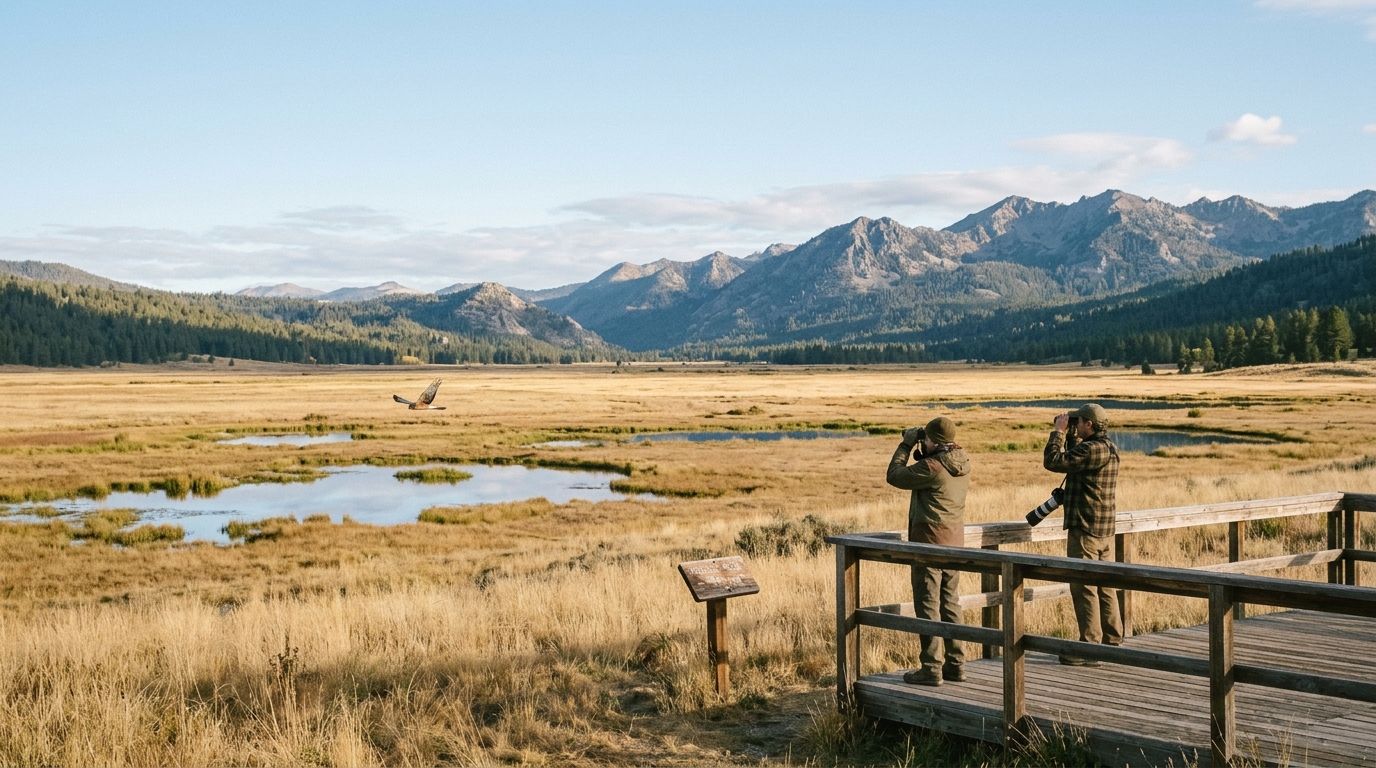
Fall changes the character of Sierra Valley. Summer breeding activity begins to quiet, daylight becomes shorter, and open grasslands, wetlands, sagebrush, and ranch country take on a more subdued look. For birders, the season shifts attention toward migrating waterfowl, resident wildlife, and an increasing concentration of raptors. For casual travelers, it offers a slower road-trip experience built around observation rather than a long list of attractions.
Sierra Valley extends beyond Sierra County, so a practical route may cross between Loyalton, Sierraville, nearby Beckwourth, and public wildlife lands managed by different organizations. That regional context matters. The Sierra Valley Preserve near Beckwourth is outside Sierra County but provides one of the most accessible places to experience the valley’s wetland and meadow ecosystems. Within Sierra County, the Antelope Valley and Smithneck Creek wildlife areas provide additional public-land opportunities near Loyalton.
This guide focuses on responsible wildlife viewing, realistic fall expectations, and a route that supports nearby communities without treating private ranch property as public access. Before leaving, review the official Sierra Valley Preserve visitor page, check current California Department of Fish and Wildlife notices, and use the site’s Road and Seasonal Conditions guide.
Why Sierra Valley Works as a Fall Wildlife Road Trip
Sierra Valley sits where Sierra Nevada, Cascade, and Great Basin environments meet. The result is a broad landscape of wetlands, wet meadows, sagebrush, grasslands, riparian corridors, agricultural land, and forested mountain edges. The Sierra Valley Preserve protects more than 2,500 acres and includes approximately 1,100 acres of seasonal and permanent wetlands. Its partners describe the valley as habitat or a migratory stop for roughly 230 bird species.
Fall does not guarantee one particular bird or dramatic flock. Wildlife movement changes with water, temperature, storms, food, and migration timing. The season is better understood as a transition. Raptors become a stronger part of the viewing experience, while waterfowl numbers can build as migration progresses. A patient visitor may also see mule deer, pronghorn, coyotes, or smaller mammals, but sightings should never be promised.
Understand What Fall Birding Actually Looks Like
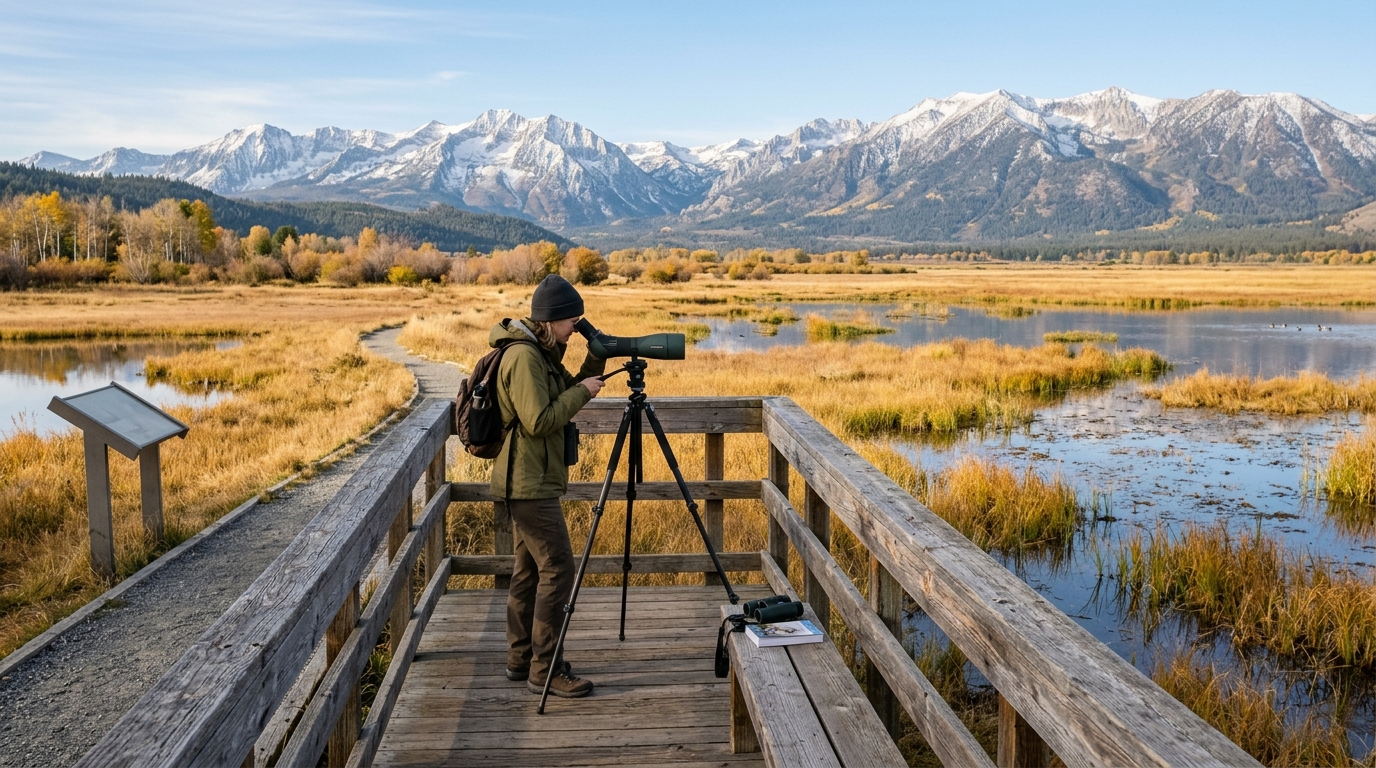
Spring and summer are known for songbirds, shorebirds, waders, and breeding activity. In fall and winter, the preserve highlights raptors such as northern harriers, ferruginous hawks, rough-legged hawks, golden eagles, bald eagles, and short-eared owls. Exact arrival and departure dates vary, so use those names as possibilities rather than a checklist that defines whether the trip was successful.
Good birding in an open valley often involves scanning fence posts, utility poles, wetland edges, distant cottonwoods, and low flight paths over grasslands. Binoculars are more useful than approaching wildlife. A spotting scope can help with birds resting far from public trails, but travelers should set it up only in safe pullouts or designated viewing areas.
Sierra Valley Preserve and Nature Center
The Sierra Valley Preserve provides year-round public access for birding, walking, photography, botanizing, picnicking, and seasonal nonmotorized boating. The property includes interpretive trails, a wildlife-viewing platform, picnic areas, and a Nature Center. Its East Entrance is associated with a birding platform and an established eBird hotspot, while the West Entrance includes accessible features and broad valley views.
The Nature Center currently operates on a limited weekly schedule, while outdoor access varies by entrance. Confirm the posted hours before traveling rather than assuming all gates and facilities follow the same timetable. Temporary ecological closures are also possible. At the time of writing, the preserve’s conditions page reported the Decker Dam Trail closed to protect juvenile birds near the dam. That status may change before your visit.
Stay on open trails and respect closure signs even when birds appear visible beyond them. Seasonal restrictions are often designed to protect nesting, feeding, or resting wildlife. The best photograph is not worth displacing an animal or damaging wet ground.
Antelope Valley and Smithneck Creek Wildlife Areas
Travelers based in Loyalton can also consider two California Department of Fish and Wildlife properties. Antelope Valley Wildlife Area lies between Sierraville and Loyalton and includes Great Basin montane habitat used by deer, upland birds, and raptors. It supports wildlife viewing and hiking, but has no visitor facilities. Arrive self-contained with water, navigation, appropriate clothing, and a plan for waste.
Smithneck Creek Wildlife Area is southeast of Loyalton and includes sagebrush, bitterbrush, wet and dry meadows, riparian vegetation, pine, juniper, and mountain mahogany. CDFW identifies wildlife-viewing possibilities such as goshawks, falcons, warblers, deer, snowshoe hares, and signs of mountain lions. It is open from sunrise to sunset, although portions may close during winter flooding.
Both wildlife areas can also support seasonal hunting. Birders and photographers should check current regulations, wear visible clothing when appropriate, remain aware of other legal users, and avoid interfering with hunting activity. Public access does not mean every adjacent road, field, or ranch entrance is open.
Build a Route Around Loyalton, Sierraville, and Nearby Beckwourth
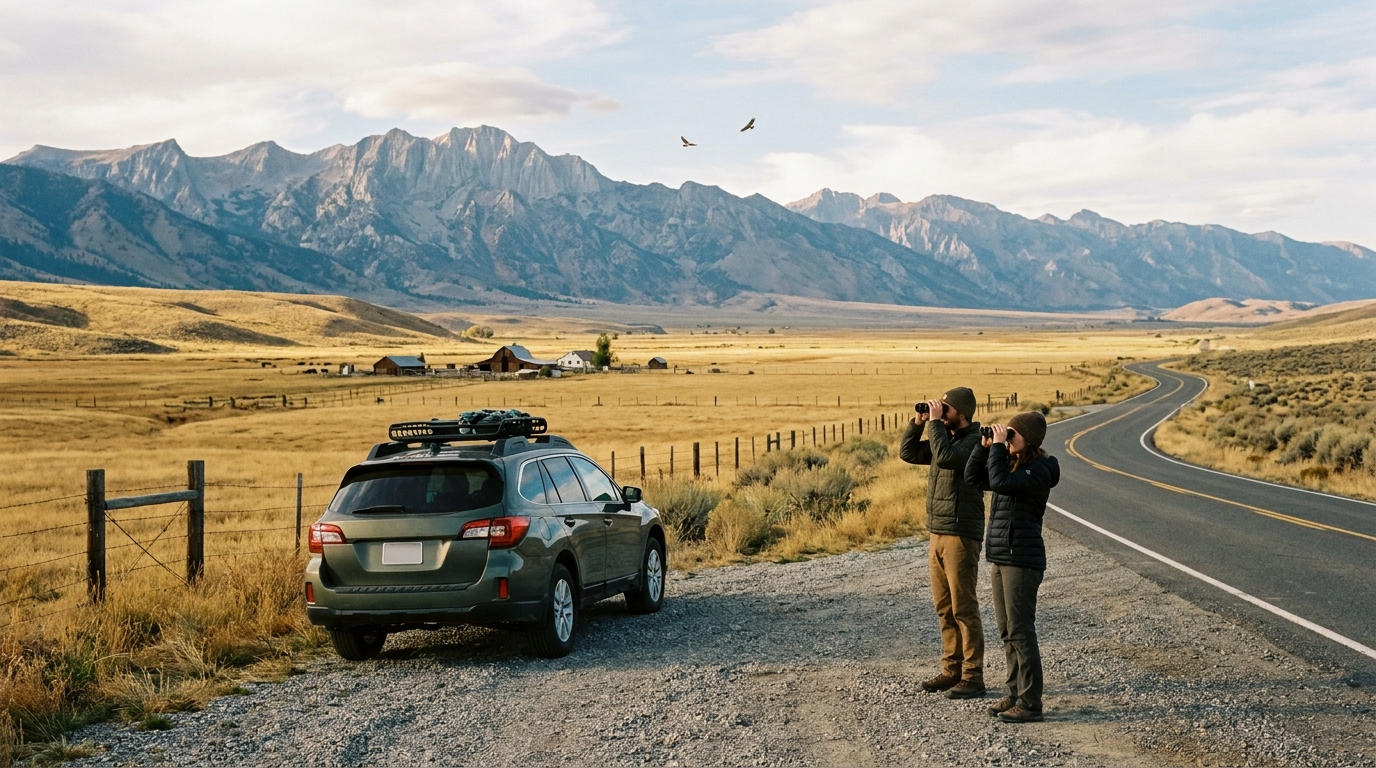
A simple fall itinerary can begin in Loyalton, continue through the eastern Sierra County landscape toward Sierraville, and include the Sierra Valley Preserve near Beckwourth as a nearby regional stop. The order can be reversed depending on lodging, weather, and the direction of travel.
Start near sunrise when birds are active and valley light is low. Spend the first part of the morning at one confirmed public-access site rather than stopping repeatedly along narrow roads. Late morning can be used for food, fuel, or a community stop. Return to a viewing location in the afternoon when raptors may be more visible over open ground, then finish before darkness makes wildlife and roadside hazards harder to see.
Use Safe Pullouts and Respect Working Ranch Country
Sierra Valley is a living agricultural landscape, not a drive-through wildlife park. Many attractive wetlands, barns, meadows, and fence lines are on private property. Do not enter ranch lanes, cross fences, open gates, block equipment access, or park on dry vegetation. Photograph buildings, livestock, and workers respectfully from lawful public locations.
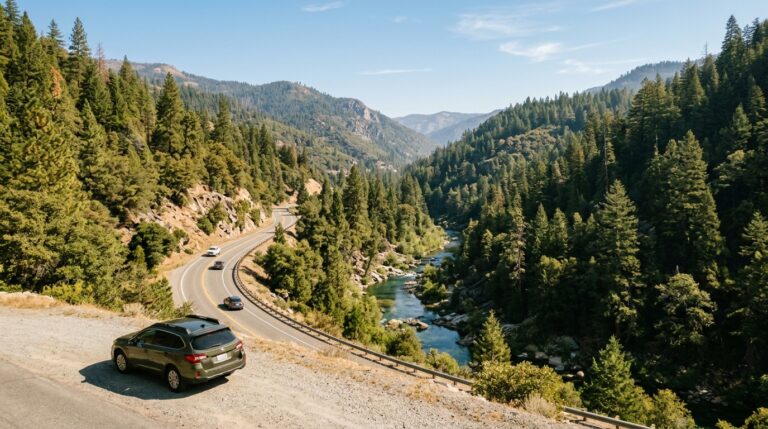
When stopping along a public road, pull completely out of the travel lane only where the shoulder is stable and parking is legal. Avoid blind curves, soft ground, bridge approaches, and narrow sections. Remain alert for farm vehicles, cyclists, wildlife, and fast-changing weather. Never stop suddenly because a bird appears beside the road.
Keep noise low and observe animals from a distance. If a bird repeatedly calls, changes direction, stops feeding, or moves away because of your presence, increase the distance. Do not use recorded calls to draw birds closer, and do not surround wildlife with multiple vehicles or photographers.
Pack for Wind, Cold Mornings, and Limited Services
Fall conditions can move from warm sun to wind, rain, smoke, or near-freezing temperatures. Bring layers, water, food, sun protection, a warm hat, gloves, and a basic emergency kit. Carry binoculars, a field guide or offline birding application, a notebook, and a camera with a telephoto lens rather than relying on a phone at close range.
Fuel and meal options are limited compared with larger destinations. Confirm operating hours and avoid waiting until late in the day to buy essential supplies. The Visitor Services directory and Getting Around guide can help identify practical stops, but individual businesses should still be verified directly.
Download maps before departure. Mobile service may be inconsistent, and routing applications can suggest roads that are private, unmaintained, or unsuitable after weather. Follow posted signs and do not use a digital route as permission to enter restricted land.
How to Watch Wildlife Without Adding Pressure
Wildlife viewing is most valuable when the animals can continue normal behavior. Stay on established trails, keep dogs under control according to site rules, and leave feathers, nests, bones, plants, and historical objects in place. Avoid trampling wetland edges or sagebrush for a better angle.
Make Observation, Not Collection, the Goal
Use the first few minutes at each stop to listen and scan. Notice habitat, wind direction, water levels, and movement before walking farther. Record what you actually observe instead of forcing every distant silhouette into a species identification. Ethical birding accepts uncertainty.
Families can make the trip engaging by counting broad groups such as hawks, ducks, cranes, or songbirds rather than chasing rare species. Children should remain close near water, roads, and livestock areas. For a wider family-oriented itinerary, connect the trip with the Family Travel hub and Parks and Outdoors guide.
Support local communities by buying food, fuel, lodging, or supplies where available, but keep expectations realistic. Small businesses may have seasonal schedules and limited staff. Leave gates, roads, picnic areas, and viewing platforms cleaner than you found them.
A strong Sierra Valley fall trip does not depend on a rare sighting. The experience comes from watching light move across the valley, learning how wetlands and ranchlands meet, and observing migration without disrupting it. Confirm current access, use designated public sites, give wildlife space, and let the landscape set the pace. Continue planning through the Responsible Travel guide and Sierra County Trip Planning hub.