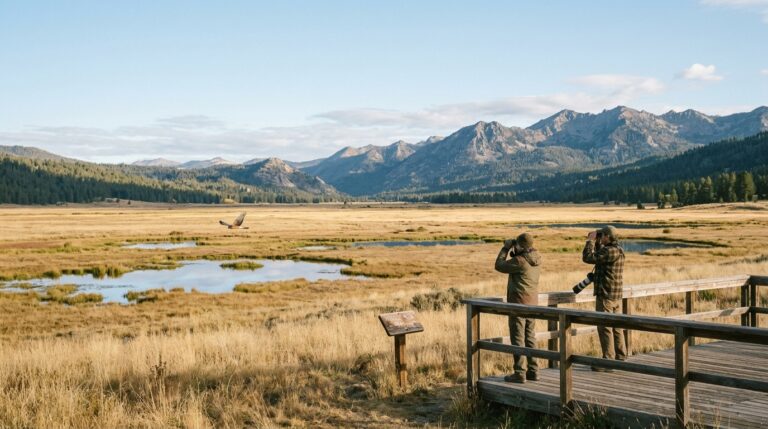
Wildfire preparedness is part of everyday life in Sierra County, where forested river canyons, remote roads, historic communities, ranch properties, and high-country recreation areas can all be affected by changing fire conditions. The county’s final January 2026 Community Wildfire Protection Plan updates local wildfire hazards, risks, and potential mitigation projects across the county’s fire-protection areas.
No single website, app, siren, or social-media account should be treated as the entire emergency plan. Sierra County states that evacuation routes are incident-specific because the safest route depends on the fire’s location, direction, terrain, and other hazards. That makes advance planning essential. Households should know how they will receive official warnings, where they will go, what they will take, and how they will move pets or livestock.
This guide summarizes practical steps for preparing in 2026. During an active emergency, follow directions from the Sierra County Sheriff’s Office, fire personnel, land managers, and other responsible agencies. Start with the county’s official Emergency Alerts page, and use this website’s Visitor Safety guide for related trip-planning information.
Why Sierra County’s 2026 Wildfire Planning Matters
A Community Wildfire Protection Plan does not eliminate risk or replace emergency orders. It provides a framework for identifying hazards, coordinating agencies, and prioritizing possible mitigation work. Sierra County’s update covers local fire-protection areas serving communities including Downieville, Sierra City, Loyalton, Pliocene Ridge, Alleghany, Pike, and surrounding areas.
Sierra County is not one uniform landscape. Western communities sit among steep, forested canyons and narrow transportation corridors, while the high country has different access and vegetation conditions. Eastern communities open into Sierra Valley, where grass, wind, ranch properties, and longer distances create other concerns. Preparedness should therefore be specific to the property, community, season, and household.
Turn the County Plan Into Household-Level Action
Begin with the parts of preparedness you can control: alerts, evacuation planning, property maintenance, documents, medications, transportation, and communication. Identify more than one possible way out, but never assume a preferred road will remain open. During an incident, use the route named by authorities and avoid closed areas.
Prepare Before Fire Weather or Visible Smoke
Build a written wildfire action plan during calm conditions. Select a meeting location outside the immediate hazard area, choose an out-of-area contact, and make sure everyone in the household understands how to reconnect if phone service becomes unreliable. Keep paper copies of essential contacts and routes because a saved webpage may be inaccessible during a power or network interruption.
Prepare a portable go bag for each person. CAL FIRE recommends supplies such as water, nonperishable food, medications, a first-aid kit, a flashlight, a battery-powered radio, spare clothing, important document copies, cash, chargers, and pet supplies. Store the bags where they can be loaded quickly rather than buried in a garage or seasonal storage area.
Review the plan with children, older adults, guests, caregivers, and neighbors who may need assistance. A plan that exists only in one person’s head is fragile. For more preparation resources, connect this article with the Getting Around guide and the Community Resources directory.
Learn Sierra County’s Alert and Evacuation Tools
Sierra County uses the Everbridge emergency alert system to send messages by text, telephone, or email. Registration is important because people who have not enrolled may not receive every local notification. The county also directs residents and visitors to Genasys Protect to check evacuation-zone status. Save your zone information before an emergency and make sure the physical address attached to your alert registration is accurate.
Town sirens provide another warning layer, but they do not replace official instructions. The county notes that many community sirens are tested daily at noon and that emergency tones can vary. Learn the system used in your community, then confirm the situation through official sources rather than rumors or undated screenshots.
Keep a battery-powered radio, charging banks, and vehicle chargers available. During a fast-moving incident, monitor official alerts without delaying departure to gather perfect information. If authorities issue an evacuation order, leave promptly. If you feel you are in immediate danger, do not wait for someone to knock on the door.
Reduce Risk Around Homes, Cabins, and Recreation Areas
Wildfire preparedness includes evacuation readiness and ignition reduction. Embers can collect in roofs, gutters, vents, decks, vegetation, and stored materials. Cleaning these areas can reduce opportunities for an ember to ignite a structure.
Start at the Structure and Work Outward
CAL FIRE divides defensible space into zones. Zone 0 covers the first five feet around buildings, decks, and attached structures and focuses on intensive ember resistance. Current state guidance describes this zone as strongly recommended but not yet legally required statewide. Zones 1 and 2 extend outward to 100 feet or the property line and include required vegetation-management measures. Local rules may be more restrictive, so property owners should confirm requirements with the appropriate fire district or county authority.
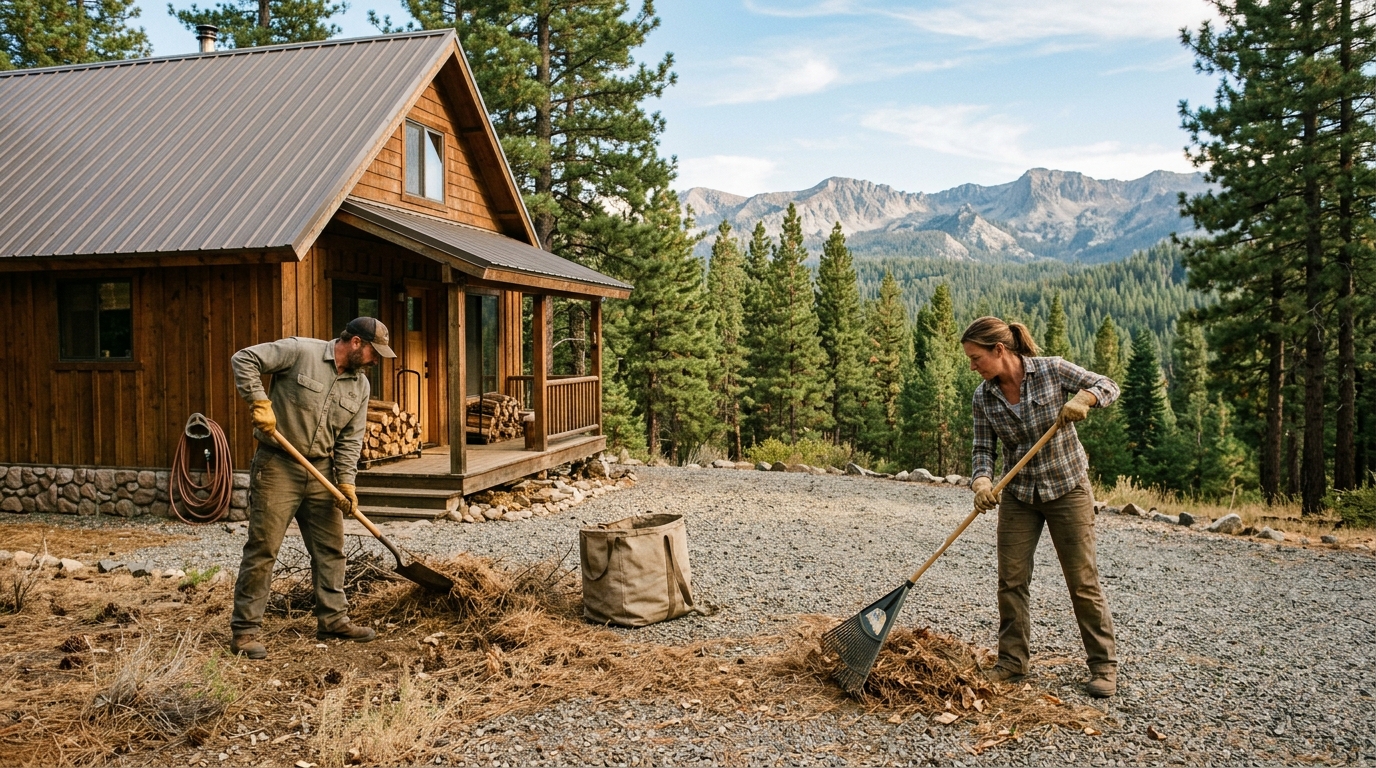
Begin by removing pine needles, leaves, dead vegetation, and other combustible debris from roofs, gutters, decks, stairs, and the base of exterior walls. Move firewood, lumber, fuel containers, doormats, lightweight furniture, and other burnable items away from the immediate area around the home. Trim branches near chimneys, address vegetation beneath decks, and maintain spacing between grasses, shrubs, and trees based on slope and plant size.
Home hardening addresses the building itself. Projects can include ember-resistant vents, maintained roofing, enclosed gaps, noncombustible materials near the structure, and better emergency access. Because some changes affect ventilation or building requirements, use qualified professionals when appropriate.
Visitors Share Responsibility for Wildfire Prevention

Preparedness is not limited to homeowners. Campers, hikers, cyclists, anglers, drivers, and day visitors can reduce the chance of starting a fire. Before traveling, check current fire restrictions with the responsible land manager. A campfire permit does not override a closure or restriction, and a fire that was allowed earlier in the season may be prohibited under changed conditions.
Use vehicles and outdoor equipment carefully. Avoid parking hot exhaust systems over dry grass, secure trailer chains so they cannot drag and spark, and do not use spark-producing equipment when restrictions make it unsafe. Fully extinguish permitted fires, never leave one unattended, and follow all local fire rules.
Visitors should also maintain enough fuel for unexpected rerouting, carry water and basic emergency supplies, and download maps before entering areas with limited service. Check the Road and Seasonal Conditions page before departure and review the Responsible Travel guide for low-impact recreation practices.
Build an Evacuation Plan That Works in Rural Sierra County
A workable evacuation plan is specific, portable, and practiced. Start by identifying every household member, animal, vehicle, medication, mobility need, and communication challenge that could slow departure. Decide who loads pets, who checks on a vulnerable neighbor, who carries documents, and where everyone meets if separated. Large-animal owners need trailers, destination arrangements, and loading practice well before a warning is issued.
Use Alerts, Zones, Go Bags, and Early Decisions Together
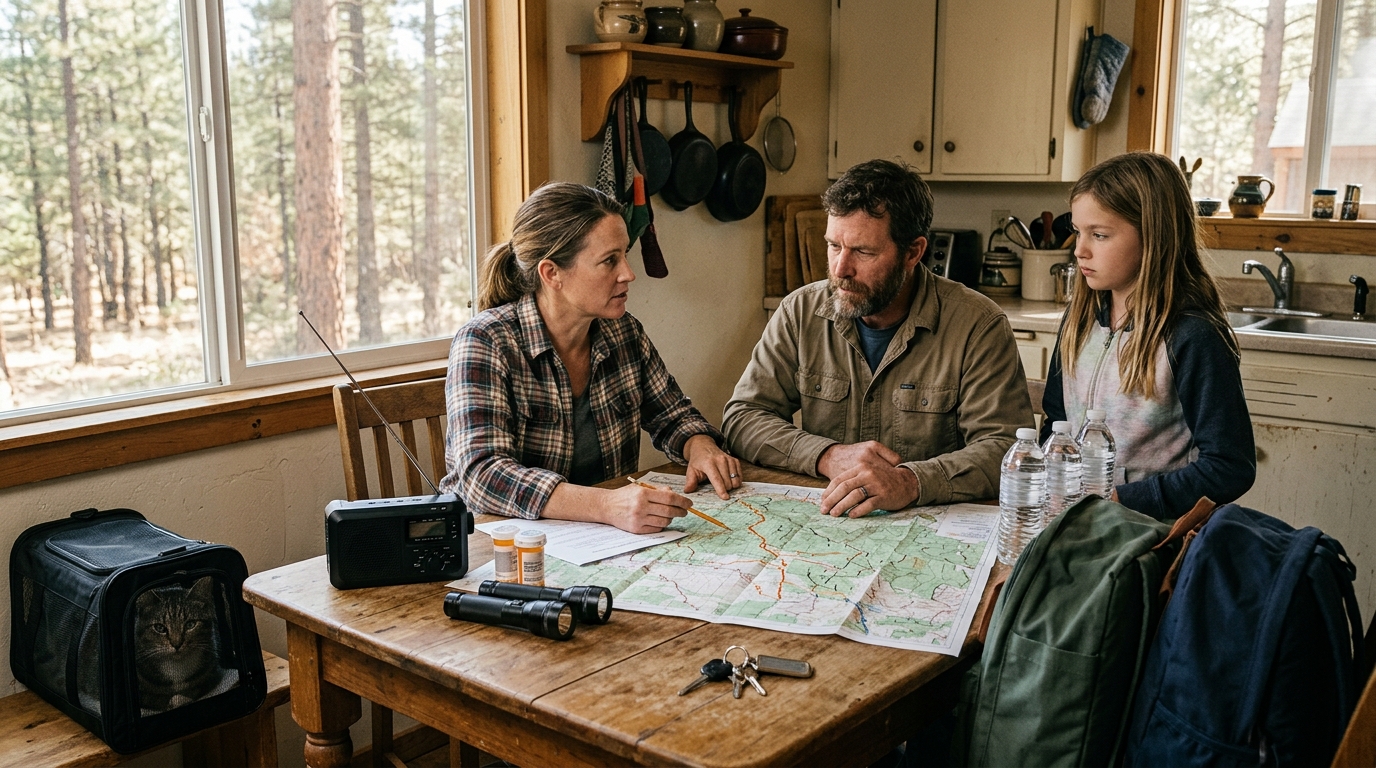
Know your evacuation zone, enroll in county alerts, and keep the Genasys map bookmarked. Place go bags, medication lists, pet carriers, sturdy shoes, flashlights, and vehicle keys where they are easy to reach. Keep vehicles maintained and avoid routinely letting fuel levels fall near empty during higher-risk periods. If an evacuation warning is issued, use that time to load essentials and move people or animals who require extra time.
CAL FIRE’s wildfire action planning guidance organizes priorities around people and pets, documents and phone numbers, prescriptions and eyewear, irreplaceable items, essential computer data, and payment methods. The point is not to pack an entire household. It is to leave quickly with the items needed for safety, communication, identification, medical care, and short-term displacement.
Do not block roads to photograph smoke, retrieve nonessential belongings, or watch firefighting activity. Rural roads may need to carry evacuees in one direction and emergency vehicles in the other. Follow traffic control and remain alert for pedestrians, livestock, debris, and emergency equipment.
After leaving, do not return until authorities say the area is open. Re-entry can involve damaged trees, unstable slopes, downed lines, hot spots, contaminated water, propane hazards, and limited emergency services. Continue monitoring official county information even after the visible smoke has moved away.
Wildfire preparedness works best as a routine. Register for alerts, learn your zone, maintain defensible space, update go bags, practice animal loading, and discuss the plan with neighbors. The county plan provides a framework, but household readiness determines how quickly people can act.
Use this article as a starting checklist, then verify current instructions through Sierra County and CAL FIRE’s Ready for Wildfire. For broader local planning, visit the Trip Planning hub, explore the Downieville guide or Sierra City guide, and keep official emergency information available offline before traveling.