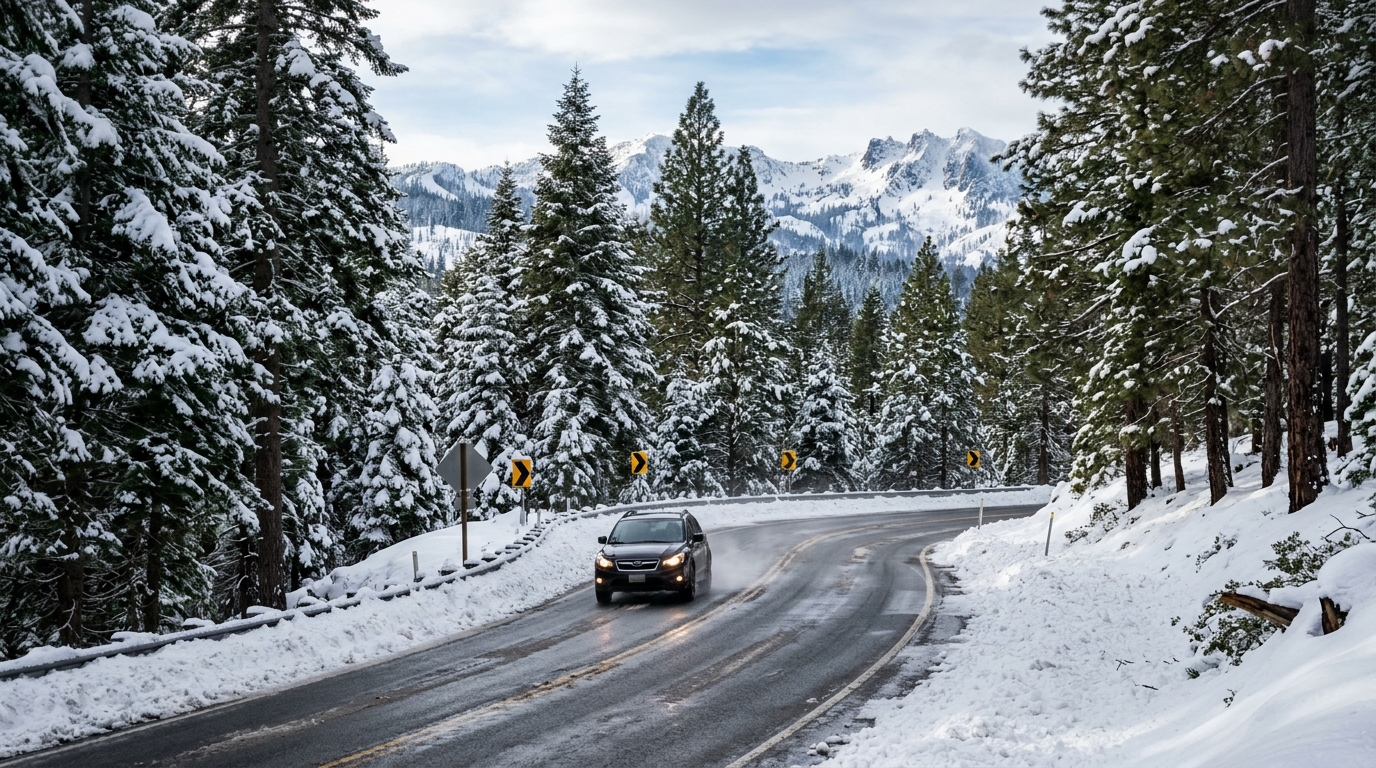
Sierra County winter roads require a different mindset from the relaxed drives that attract summer visitors to Downieville, Sierra City, the Sierra Buttes and Sierra Valley. Snow, ice and storms can change mountain road conditions rapidly, while a route that looks short on a map may include steep grades, narrow sections and limited services. For late 2026 and early 2027 travelers, understanding California chain controls is as important as choosing a scenic destination.
This guide provides a county-focused planning framework rather than a list of roads guaranteed open today. Caltrans publishes current highway restrictions and practical winter-driving guidance; use those services before every journey. Never rely on an old trail photograph, lodging listing or route planner to establish that a particular mountain approach is passable. If road conditions are hazardous, change the plan. Even a short scenic drive deserves a backup destination, a daylight arrival target, and a clear point at which your group will turn around rather than continue into worsening weather.
Why the same county can have very different road conditions
Sierra County stretches from river canyons and wooded communities toward high-elevation country and broad valley landscapes. A road near a lower river town may be wet while another route toward the mountains is icy. The temperature at your starting city does not describe shaded turns or elevations several thousand feet higher. Storm systems may also affect roads at different times.
Plan by road segment, not just by destination. Check the exact highways and connecting local roads, and confirm whether an official closure applies to your route. A map’s estimated driving time usually assumes normal conditions; it cannot reliably predict winter chain installation, plowing delays or an unexpected detour.
Understand R-1, R-2 and R-3 controls
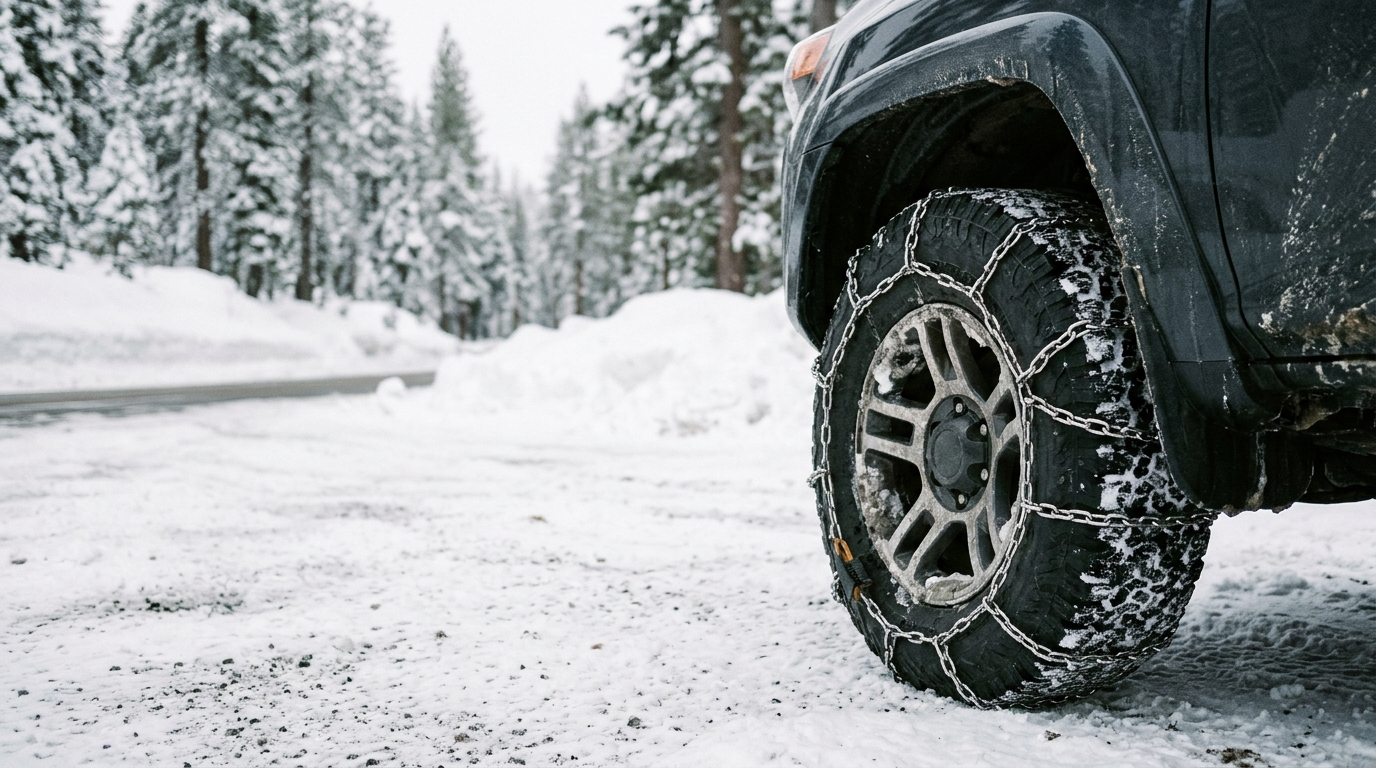
California’s chain-control system includes different levels of traction requirements. At R-1, many vehicles with appropriate snow tires may be exempt from installing chains but must carry them. At R-2, four-wheel or all-wheel-drive vehicles with suitable tires may qualify for an installation exception, while still needing to carry traction devices. At R-3, chains are required for all vehicles, without exceptions. Always read the posted instructions for the active location.
Do not assume AWD means you can ignore chain-control signs. Vehicle configuration, tire type, trailer use and equipment fit all matter. Caltrans guidance and posted enforcement instructions govern, not social-media shortcuts. Learn how to install appropriate devices before encountering a snowy roadside checkpoint.
For additional context, see our related guide: Sierra City and Lakes Basin summer trip guide.
Check whether your vehicle is actually prepared
Confirm that snow chains or other approved traction devices fit the tires and are allowed by your vehicle manufacturer. Some models have clearance restrictions that require specific equipment. Check tire condition, windshield wipers, lights, defroster and fuel level. Carry a flashlight, warm clothing, water and basic supplies in case traffic stops or a storm takes longer than expected.
A rental contract may restrict chain use. Ask the rental provider before choosing a mountain route, and consider a lower-elevation itinerary if the vehicle cannot meet traction requirements. Do not wait until a storm to discover you have the wrong chain size or do not know how to fit the equipment.
Use Caltrans QuickMap for changing conditions
Caltrans QuickMap provides live traffic, incidents, lane closures and active chain-control information. Turn on the relevant layers and review the specific highway sections you plan to use. Check again immediately before leaving and stay alert for roadside signs that may reflect newer conditions. A saved screenshot is less valuable than the current feed.
Keep a backup route only if it is officially open and appropriate for your vehicle. Smaller forest or county roads are not necessarily better detours; some receive limited winter maintenance. If the main road closes, postponing travel may be safer than diverting onto a remote unplowed shortcut.
Choose destinations with realistic winter access
Sierra City and the Lakes Basin inspire alpine adventures, but summer trailhead access is not a promise for winter. A remote parking area may be buried in snow or situated beyond a seasonal road restriction. Research where public parking is permitted and whether winter recreation requires specialized equipment. Do not block plow turnarounds or gates to reach a snowy viewpoint.
If the trip is mainly about a quiet mountain-town meal or scenery, a reachable village may be enough. If you want snowshoeing or skiing, choose an area officially suitable for that activity and match conditions to experience. The safest destination is the one you can both reach and leave.
Leave a generous daylight and fuel margin
Winter travel tends to take longer because of lower speeds, traction checks, poor visibility and occasional waiting. Fuel stations and food options can be farther apart in small mountain communities. Start with a full tank or sufficient battery range and avoid counting on a remote service remaining open through a storm. Build an itinerary that gets you back before the roads cool and visibility worsens.
Tell someone your route and estimated arrival time. Keep a charged phone and offline directions. If passengers become cold or worried, shorten the journey rather than adding stops. A scenic county trip should not become an endurance test simply because the hotel is already booked.
Drive and park with consideration for local residents
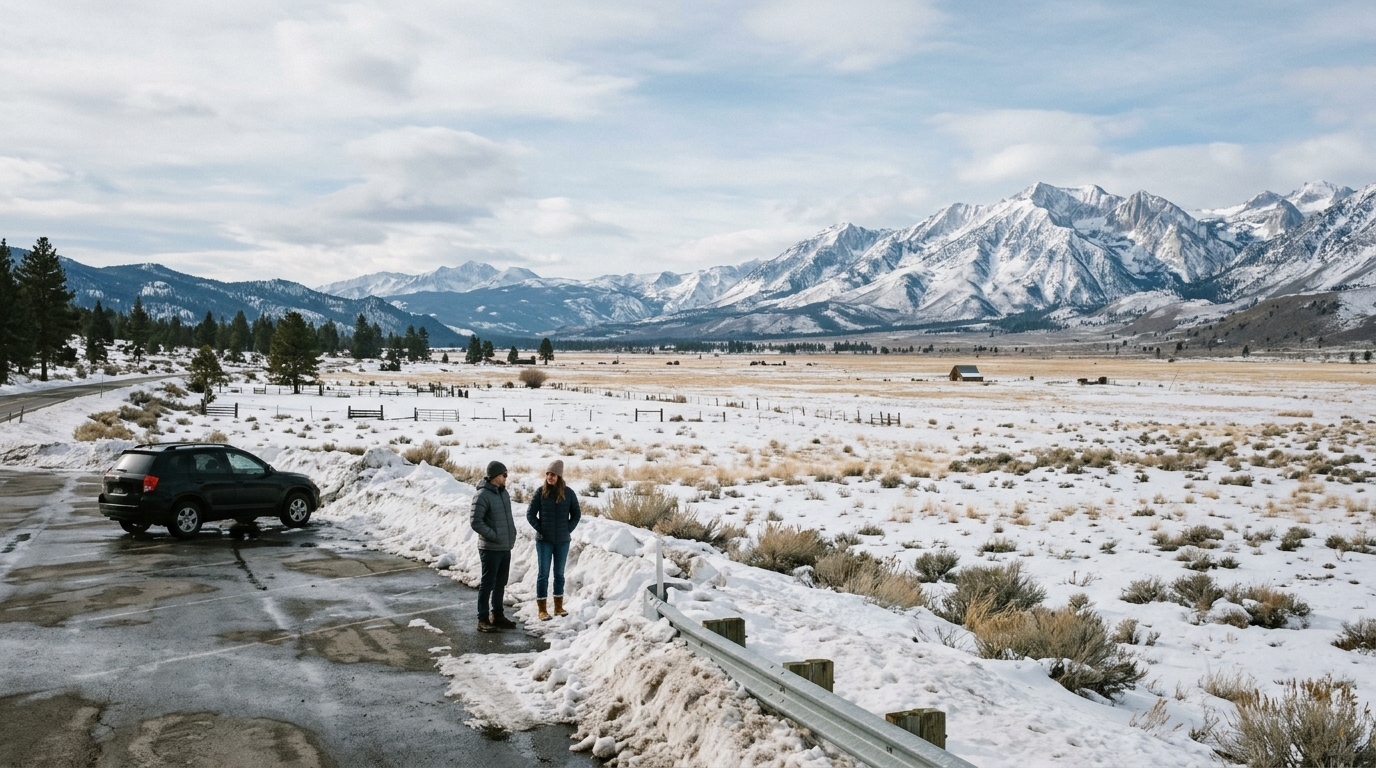
Mountain roads carry residents, delivery vehicles, emergency workers and snowplows alongside visitors. Pull over only where safe and legal, leaving access clear for maintenance equipment. Avoid stopping on blind curves or narrow snowbanks for photographs. Be patient behind slower traffic; passing may be unsafe when pavement conditions vary across the lane.
In towns, respect private property and do not create informal parking areas in driveways or plow zones. If a public attraction has seasonal access limits, follow them. Small communities benefit when winter visitors arrive prepared and avoid adding preventable rescue or congestion problems.
For authoritative details and any subsequent updates, consult Caltrans official winter driving guidance. Official notices take precedence over a general guide.
A simple pre-departure checklist
Review a current weather forecast, the precise road conditions and active Caltrans chain controls. Check that the vehicle is suitable, the equipment fits and the driver can install it safely. Confirm where to refuel, park and take breaks. Share the travel plan, and carry additional clothing and supplies in case the journey is longer than expected.
At the first sign of deteriorating conditions, reassess instead of waiting for a road closure. Ask whether the destination is essential and whether a shorter route meets the same goal. The right decision may be to stay in a lower community, reschedule a remote outing or enjoy a local indoor attraction.
When snow changes the plan mid-trip
If officials close your road, obey the signs and use only authorized alternatives. Never drive around a barricade or follow tracks onto an unmaintained route. If you need traction devices, install them in a designated safe area away from moving traffic and follow posted speed requirements. If weather worsens substantially, seek an appropriate safe stopping place rather than continuing toward uncertain terrain.
Do not announce an area open to other travelers based on your arrival experience. Conditions can evolve within minutes. Share official status links when advising friends and guests. Responsible winter travel means understanding that a beautiful road is still infrastructure subject to hazards and closures.
Sierra County winter roads can lead to beautiful seasonal experiences, but they reward patience and preparation. Focus on official chain rules, vehicle suitability, extra travel time and alternatives that keep the route manageable. A shorter visit to an accessible community may provide a more enjoyable trip than an ambitious journey into worsening weather.
Before every departure, check Caltrans QuickMap, posted signs and any local restrictions. This guide describes planning principles for 2026–27; it cannot establish current road status. When the mountain changes the rules, let safety—not a reservation or photograph—set the itinerary.